
Event Category: In Person US






Categories
West Coast Summit

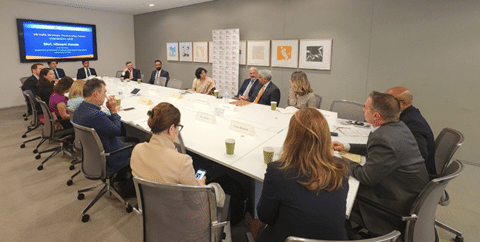
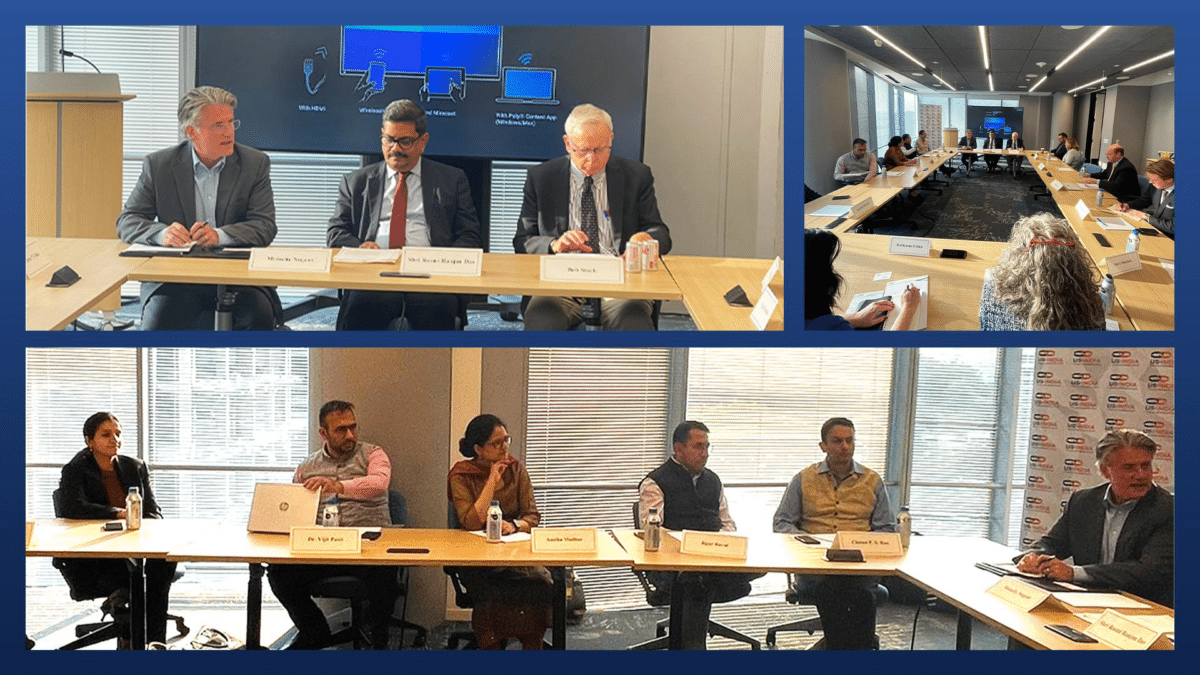




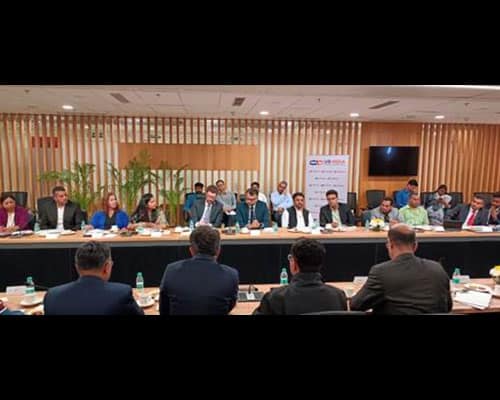








As India celebrates thirty years of economic reforms, contemporary goals of becoming a global manufacturing hub necessitate new reforms to increase ease of doing business. On December 7, 2021, the US-India Strategic Partnership Forum launched two new reports focused on identifying pitfalls and solutions in India’s path to becoming a reliable manufacturing hub and a true competitor with China.
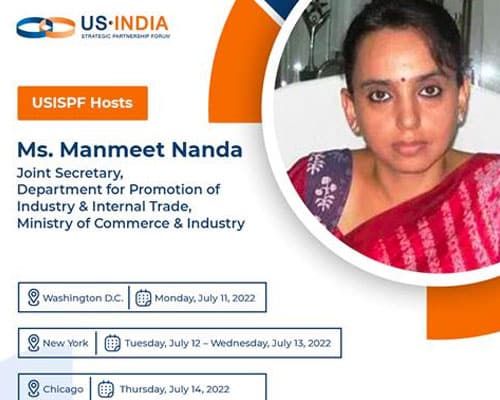
The reports were launched alongside an industry panel moderated by Atul Dhawan, Chairperson of Deloitte India. Joint secretaries from multiple ministries also spoke at the event including: Manmeet Nanda, Joint Secretary, Department for Promotion of Industry and Internal Trade, Ministry of Commerce and Industry; Gaurav Masaldan, Joint Secretary (Customs), Department of Revenue, Ministry of Finance and Saurabh Gaur, Joint Secretary, Ministry of Electronics and Information Technology.
The reports found that hi-tech sectors in India have the potential to offer an additional investment of USD $21 billion and create 550,000 direct jobs and 1,400,000 indirect jobs over the next five years. In addition, COVID has led to greater automation and digitization of work practices and the Modi administration’s Aatmnirbhar Initiative has ameliorated the opportunity for India’s participation in the Global Value Chain. USISPF’s recommendations for enhancing competitiveness are necessary to seize the above opportunity and are detailed in the two reports.
The first report, “Enhancing India’s GVC Competitiveness”, analyzes India’s competitiveness in comparison with Thailand and Vietnam in Ease of Doing Business (EODB), Cost of Doing Business, and Labor Market. The report makes recommendations for increasing EODB, improving labor productivity, and reducing the cost of doing business. The second report, “Shifting GVCs to India: Addressing the Key EODB Challenges”, focuses on the reasons and solutions for the current gaps.
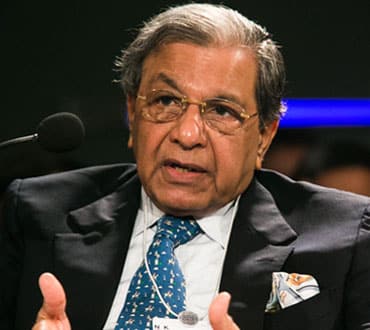
USISPF and the Raj Center at Columbia University hosted N.K. Singh, the Chairman of the Fifteenth Finance Commission, for a discussion on the federal polity of India, India-US relations, and the farmers’ protests. The session was moderated by Dr. Arvind Panagariya.
Singh explained that India is a union of states, rather than a confederation. The evolution of the same is marked by the Government of India Act of 1919, followed by the Government of India Act of 1935. The federation of states has been clearly defined in the constitution. The 7th schedule of the Constitution defines subjects that are the domain of states, subjects under the central government, and concurrent subjects with the Indian parliament’s decision being binding. The classic distribution of subjects between the union list, states list, and concurrent list has faced many challenges. For instance, education was a subject that was transferred to the concurrent list leading to the enactment of the Right to Education act. Employment was a subject in the states list, however, that too was transferred to the concurrent list when the parliament implemented the MNREGA. The distribution of subjects has made it difficult to address issues such as natural disasters as it has become unclear who is responsible for spearheading the crisis response. In the past half century, most centrally sponsored schemes had previously happened to be under state domain but were undertaken through the mutual consent mechanism exercised under Article 282 of the Constitution. In the report put forth by the Fifteenth Finance Commission, Singh stressed that the 7th schedule and use of Article 282 must be reviewed.
Explaining the history behind the finance commission, Singh stated that between 1949 and 1951, an interim finance commission was created which attempted to resolve issues surrounding what percentage of union tax revenue should go to the central and state governments – an issue that cropped up once again when India created the Goods and Services Tax (GST) Council, a permanent body to look into indirect taxes and manage the newly adopted GST. Furthermore, Singh said that the Finance Commission has submitted its report to the President who has accepted their recommendations. Accordingly, the Finance Commission has suggested fiscal reforms to increase the tax-to-GDP ratio, through an overhaul of the GST. The share of taxes to be devolved to states, including Ladakh and Jammu & Kashmir, has remained at 42%. The shares of taxes to individual states were then determined through a careful consideration of geographic area, forest cover, demographic management and tax effort to judge performance, equity, efficiency, and needs.
Dr. Panagariya asked Singh regarding agriculture market, which was historically a state subject. For the same, reforms have been ongoing since 2003 to assuage the plight of small farmers. He further added that every country that has gotten richer and more developed has done so because of moving workers away from farming. Singh lauded the farm laws for creating more options available for farmers to select the best person and price to sell their produce. He mentioned Bihar as a state that is reaping the benefits of eradicating the APMC. He cited the goal of the agriculture reforms as raising productivity in the agriculture track, adding that these reforms were the beginning of much more comprehensive agriculture reforms. The finance commission report has articulated areas of reform including diversification of cropping, water conservation patterns, and improvement of agricultural exports. The report also deals with urbanization, whereby resources assigned to states have been tied to some performance criteria via urban local bodies. Since urbanization is an important indicator of growth, cities have been classified by population between 1m+, 100k to 1m, and cities below 100k. This will incentivize the creation of new cities and spur urbanization.
Dr. Panagariya expressed doubt over centrally sponsored schemes whose progress is hard to track and questioned whether such schemes should be continued. Singh stated that all schemes will have a sunset clause, to be reviewed regularly so as to make sure that resources are not being wasted. He said that the report exercises for deep rationalization of state sponsored schemes, including the closure of many poor functioning schemes.
Speaking of India and the US, Singh said that the bilateral relationship has strengthened through the years. He mentioned the meeting between John Kerry, Special Envoy of Climate, and Prime Minister Narendra Modi as indicative of the countries’ strong ties on matters of renewable energy, green technology, health related infrastructure, and the deepening and diversification of the new partnership of the Quad. Dr. Panagariya brought about India-China relations, further adding that while he had advocated for India to be a part of RCEP, that confidence and level of trust had declined after the tragic skirmish between soldiers in Galwan Valley. Singh responded saying that India must not distance itself from China through embargo or such but through deeper connections with the US and the Quad, as well as active policies to enhance India’s productivity and defense capacity.
Responding to the probability of the US imposing sanctions on the delivery of the 1st battery S-400 missile Russia system, Singh stated that there was an ongoing dialogue to clarify the necessity of the system for India. On the topic of defense, he added that India must create a non-lapsing fund to generate resources to impart predictability and certainty for capital expenditure of defence, so states do not pay through a cess or sub-charge. Answering questions about the lessons learned from GST rollout, Singh admitted that he would prioritize simplicity, simplify risk and find one revenue neutral rate, one de-merit rate, and one merit rate. He also said that he would try for more predictability and greater robustness in the tech platform. Speaking of the reformulations in urban interconnectivity infrastructures in light of the pandemic, he said that there would be special initiatives from the incubation fund and the Pradhan Mantri Gram Sadak Yojana to promote the creation of new cites Lastly, touching upon the nation’s dependence on fossil fuel revenues, he stressed that we need to move away from fossil fuels dramatically, re-calibrate of the entire structure to allow market forces more leeway, and have systems of connectivity and storage with the grid. Singh added that both the India and the US are ready to meet these daunting challenges.
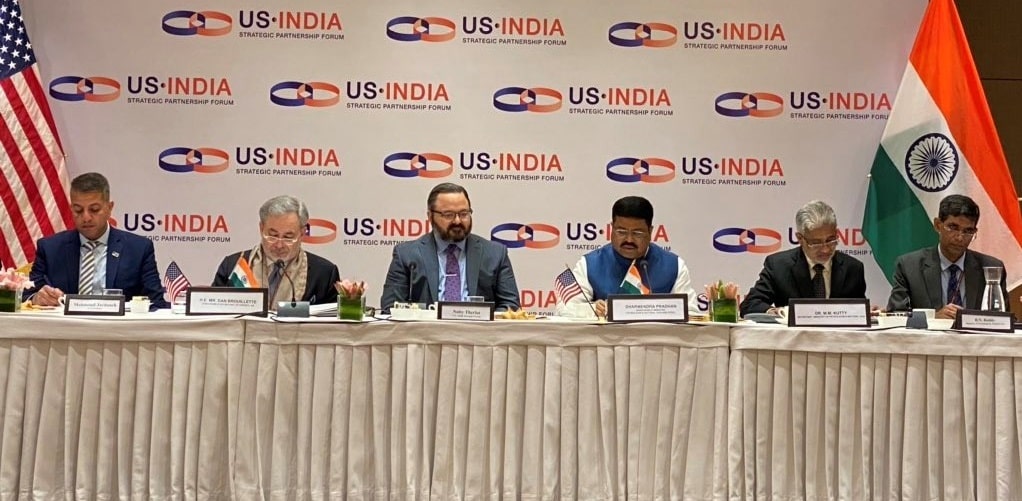
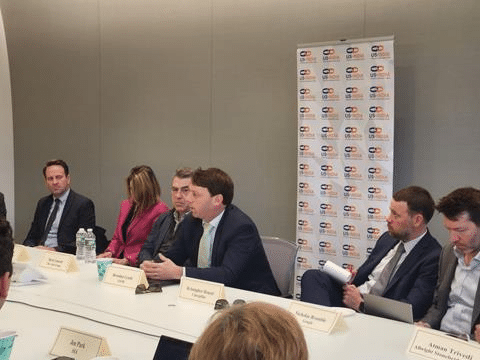
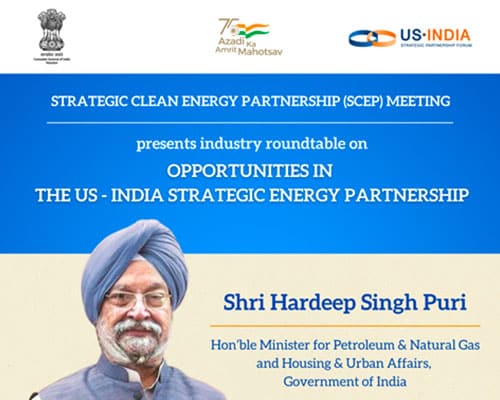
On February 24, USISPF convened a round table with Union Minister of Petroleum and Natural Gas, Dharmendra Pradhan, and U.S. Secretary of Energy Dan Brouillette and senior industry executives to mark President Donald J. Trump’s maiden visit to India. Both sides reviewed the progress of the U.S-India Strategic Energy Partnership and emphasized the centrality of industry in expanding energy access and security between our economies.
MoU on Virtual Gas Pipeline to Expand Gas Access in India
At the USISPF round table, Union Minister of Petroleum, Dharmendra Pradhan and the Secretary of Energy, Dan Brouillette presided over the signing of a Letter of Cooperation between ExxonMobil India LNG Limited (Chart Energy & Chemicals, Inc) and Indian Oil Corporation Limited to establish a system of transportation infrastructure to expand gas access in India.
The Road to $5 Trillion: Next Steps in Growing Trade and Investment between Two of World’s Largest Economies
This panel with Secretary Guruprasad Mohapatra (DPIIT), Mahesh Palashikhar (GE South Asia), Ajay Singh (SpiceJet) and Pankaj Patel (Zydus Cadila) explored short-term and long-term policy steps required to improve India’s ‘ease of doing business’ and reorient India’s trade policies.
U.S.-India Strategic Collaboration in the Indo-Pacific
The panel discussion explored opportunities for Indo-US collaboration in the Indo-Pacific with Ambassador Kanwal Sibal (Former Foreign Secretary); Dr. Christian Hirst (Acting Deputy High Commissioner, Australian High Commission); Ram Madhav (National General Secretary, BJP); William Blair (Lockheed Martin) and Arun Kumar (KPMG India).
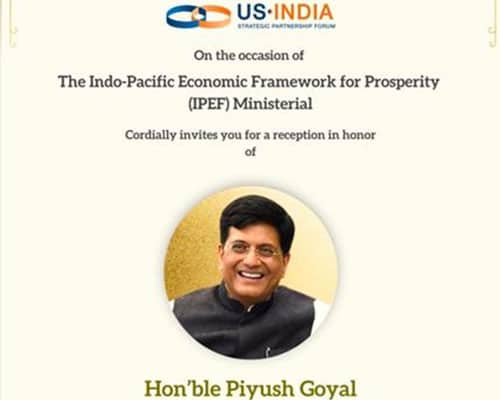
Fireside Chat with Piyush Goyal, Minister of Commerce & Industry and Railways
At the event, applauding American companies’ efforts in India and encouraging them to deepen their ties in the Indian market, Union Minister Shri Piyush Goyal said, “Investments coming into India will be a natural consequence of a secure neighborhood and the aspirational demands of a billion plus people. The Government is making regulatory adjustments to make investing in India an attractive proposition.”
Shaping the New Economy: Transitions & Trends in Technology
The panel discussed ways in which businesses and governments in both countries can come together to open talks on technology and standard-setting, rules for digital trade and services, and embrace a world of disruptive change. Speakers included: Amitabh Kant (Niti Aayog); Aruna Sundararajan (Former Secretary of Telecom); Sanjay Nayar (KKR); Ajit Mohan (Facebook India) and Uday Shankar (The Walt Disney Company).
Realizing the Potential of ‘Major Defense Partnership’
Panelists discussed the potential of India’s designation as a “Major Defense Partner” of the United States. Discussants included: Ambassador Navtej Sarna (Former Ambassador of India to the US); Sukaran Singh (Tata Advanced System); Sudhakar Gande (FICCI); Ashish Rajvanshi (Adani Group) and Salil Gupte (Boeing India).
Advancing U.S.-India Energy Cooperation
This panel explored the state of the U.S.- India energy partnership, short- and long-term reforms required to seize opportunities in the oil and gas and the renewable space. Speakers included: Sumant Sinha (ReNew Power); Richard Boocock (Air Products); T.Srinivas (Reliance Industries); Sanjiv Singh (Indian Oil); and Deepak Bagla (Invest India).

USISPF & US-ASEAN Business Council convened a briefing on trade & politics in the Indo-Pacific region, discussing infrastructure, maritime security & energy needs with Ambassador Thani Thongpakdi, Embassy of Thailand, DCM Amit Kumar, Embassy of India and Ernie Bower, President & CEO, Bower Group Asia.
USISPF and US-ASEAN business council co-hosted a series of discussions during the day to preview economic, trade and strategic developments in the Indo-Pacific region featuring Dr John Wood, Director, Indo-Pacific Outreach, US Indo-Pacific Command; Frank Ruggiero, Senior Vice President, BAE Systems; Frank Samolis, Partner & Co-Chair, International Trade Group, Squire Patton Boggs; Barbara Weisel, Managing Director, Rock Creek Global Advisors & Meredith Sumpter, Head -Research Strategy & Operations, Eurasia Group; Ambassador Richard Verma and Diane Farrell, Acting Deputy Under Secretary for International Trade, U.S. Department of Commerce.
The Forum hosted a panel discussion on recent RCEP activities with Anthony Orford, First Secretary (Trade), Embassy of Australia and Aishah Mohamed, First Secretary (Economics), Embassy of the Republic of Singapore. Lisa Schroeter, co-chair of the Forum Trade Taskforce and Global Director of Trade and Investment Policy, Dow, moderated this discussion.
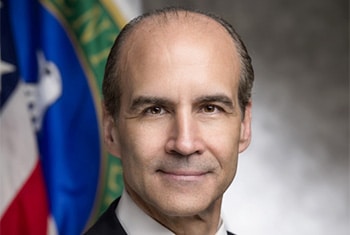
On July 24, 2020, USISPF hosted a briefing with Under Secretary Mark Menezes of the Department of Energy to discuss the recent U.S.-India Strategic Energy Partnership (SEP) Ministerial as well as future energy collaborations with India. Moderated by Nolty Theriot, Senior Vice President of Government Affairs & Policy, the panel included partnerships from a variety of industry members, including companies like Chart Industries, Tesla, Exxon Mobile, Cheniere Energy, Air Products & Chemicals, Freeport Industries, Xcoal Energy & Resources, and JTI India Projects. The discussion offered insights into government and industry perspectives on opportunities and challenges in the U.S.-India energy relationship.
Under Secretary Menezes highlighted the industry perspective, especially pursuing an ‘all of the above’ approach as a means of advancing economic growth and energy security. Following the second iteration of the U.S.-India Strategic Energy Partnership Ministerial meeting, the Under Secretary pointed to energy trade as a critical point of the bilateral relationship. To that end, he emphasized recent growth in this partnership. The U.S.-India Gas Task Force has already seen success in expanding gas and oil trade, the U.S. is now India’s fifth largest supplier of natural gas, and there has been an increase in crude oil and coal imports in India from the U.S. Looking forward, the nuclear advancement discussions also represented one important avenue to advance the partnership. Thus, the abundant energy supplies from the U.S. have been well utilized in meeting Indian demand.
Energy technology exchanges were also featured as an important component of this relationship. The launch of the Public-Private Hydrogen Task Force, together with the Ministry of New and Renewable Energy, the USISPF and the Department of Energy focused on the production of hydrogen from both renewable and fossil fuel sources. Under PACE-R, efforts towards research and development on smart grids and biofuels were conducted by collaboration between American and Indian academics, national labs, and private players. Bloom Energy was spotlighted as a private player leading in the area of fuel cell use. These developments occurred in conjunction with workforce development benchmarks as well. The Under Secretary reiterated the Department of Energy’s commitment to gender diversity and skillset diversity, and the work of the South Asia Women in Energy platform to this end.
The panel offered space for industry members to share their work and feedback. Companies were in agreement on India’s critical role in future energy sector growth, both as a collaborator and as a significant market. To this end, the need for pilot projects and the acceleration of regulatory body certification was suggested as a means to speed up this development. The support for a hybrid model, where no one fuel source would ‘win out’, was reiterated, and hydrogen spotlighted as a big part of this future. India’s use of its deep-water territory as a source of domestic crude oil and potentially natural gas energy was suggested to reduce its dependence on imports. Companies expressed that it would be beneficial to both countries if it was an American IOC that assisted this transition. They also highlighted the need for India to update its investor protection regulations to facilitate this. Additionally, in terms of regulatory changes, the parity in India’s tax structure for LNG in comparison to other fuels was also suggested as the key to unlocking LNG demand in the country.
Participants also spoke of opportunities in new avenues, including reduced-emission sources of energy, Gasification technology, in addition to carbon capture utilization and storage, were discussed as opportunities for significantly cleaner uses of indigenous energy sources. The growing Indian steel industry also offered growing opportunities to export metallurgical coal to India, a critical input for the industry that India does not produce in the right grade abundantly. As a win-win situation, it offered the U.S. a huge opportunity as it is a 7-billion-dollar market. On India’s end, the quality of U.S. coal, both metallurgical and low-ash, low-moisture thermal coal, is among the world’s best.
Finally, participants highlighted some regulatory changes that would increase the ease of doing business bilaterally. While Indian clients typically preferred flexible short or medium-term contracts (particularly given the current economy), long-term contracts were seen as most beneficial to the relationship, and investments in infrastructure and shifting market dynamics would be useful to this end. Facilitating face-to-face meetings with a wider consortium of Indian companies was also suggested as a way to expand the buyer segment. Finally, achieving more clarity and consensus on tariffs, aligning safety standards to make sense for U.S. companies, and streamlining procedures for India-based operations would go a long way in boosting business.
Under Secretary Menezes concluded the call by commending the industry members for bringing in cutting edge technology to use. While India has a great future of growth in the energy sector, bringing technology across all fuel sources to meet this demand in a manner that will reduce emissions is essential. The Department of Energy is committed to working bilaterally through potential hurdles, from tax policy to regulations, and in collaboration with industry members across both nations to this end.

On Tuesday, July 21, the U.S.-India Strategic Partnership Forum hosted Ridham Desai, Managing Director of Morgan Stanley India, to talk about Indian equity market outlook for 2021. Mr. Desai’s expertise gave attendants an insight to the various factors at play in determining the Indian economy both pre and post COVID, as well as its potential for recovery.
Here are 5 key takeaways from the session:
- Equity Market Downturn: While the government elected in 2014 created a lot of optimism, due to its sizeable mandate after decades of fractured coalition governments, the positive impact of this optimism in the equity markets took a downturn a year into their term. India began derailing and its stocks consistently underperformed in comparison to emerging market equities. So, while absolute gains of about 50% were seen in the stock markets since March this year, they mask the downs of the stock market for the preceding five years and do not reveal how Indian equities struggle to compete with emerging market cohorts. It also reveals a broader lack of confidence from the markets in India’s future growth prospects.
- Policy Environment— Restrictive or Enabling? The downturn in the equity market was attributed to a few policy decisions. First, there was a restrictive policy environment for the previous five years, which may have long term benefits, but caused a near term tax on growth. These include the comprehensive Goods and Services Tax reform, the new bankruptcy code, as well as more restrictive real estate regulations. While sustainable overall, these policies created a near term skepticism in the market about India’s prospects. There were also some policy missteps that compounded the issue. For instance, the 2014 administration inherited public sector banks with balance sheets that were in need of government aid. However, the administration did not believe at first that these loans deserved public taxpayer help, which hurt growth, and it was only in 2017 that the banks were recapitalized following a change in the government’s mind. Another decision was demonetization, which served some overall purpose, but dropped monetary aggregates and currency in circulation to huge lows, which were not recovered for about three years. Additionally, corporate decision making on unviable infrastructure projects that created strain on bank balances through loan-taking had an impact. All these factors, in unison, meant that the Indian economy was experiencing some bumps in the road. The market lost confidence that India’s growth rate was trending at 7-8 percent, pegging it at about 5 percent instead.
- Covid-19 Hit Economy: Even as the policy environment began stabilizing by early in 2020, COVID unfortunately hit and stalled their effects. India’s financial sector was not yet out of the woods, with banks just exiting one non-performing loan cycle and now at risk of another. It is thus important that this does not lead to risk aversion in the banks, leading to low impact loans that slow growth. While COVID has not had the outrageous impact predicted for India, the near-term risk factor remains until the vaccine is available. Prior to the lockdown, India’s PMIs had hit all-time highs in February, offering a glimpse at India’s growth potential sans COVID and reflected changes in corporate tax rates and other government reforms.
- What can speed up recovery? Externally, there is a push to diversify the supply chain by multinational corporations, and India is being considered a viable option by many. This creates an impetus for Indian governments, and both at the state and central level, to create more investor-friendly reforms. We’re already seeing a surge in services investments, from banks to tech companies who have vested interests in India as a marketplace & India offers strong growth potential to various aspects of tech value chain. Additionally, it was suggested that the government make strategic sales of its assets, through a transparent and confidence-boosting process following the example set in the early 2000s.This has already begun with the government’s announcement of privatizing 5 percent of the railways — a small percentage change representing a huge shift in thinking. Other suggested avenues would be the healthcare sector, where private-public partnerships have been seen to work well in the past. Finally, other reforms updating labor laws and liberating the farmer economy from middlemen will have domino impacts on the economy, boding well for a strong Indian recovery from the current economic crisis.
- Optimism in India’s growth story: While the session offered insight into the policy background behind India’s equity market underperformance, and pathways for its emergence from this crisis, there was also a great confidence in India’s ability to emerge from the crisis stronger. This optimism was driven from a world-wide V shaped recovery thanks to enormous stimulus, which would certainly buoy India’s recovery as well. Without risk aversion on the part of Indian banks, India’s strong demographics and growth prior to the lockdown created a positive vision for its future.
On July 23, USISPF hosted a roundtable with Dr. Guruprasad Mohapatra, Secretary of the Department for Promotion of Industry and Industrial Trade (DPIIT). In discussion with USISPF members, Secretary Mohapatra shared insight and updates on the ongoing work of the DPIIT to improve ease of doing business in India.
In his opening statements, Secretary Mohapatra discussed the challenges and opportunities presented by the COVID-19 pandemic, which has caused companies to rethink their strategic plans, accelerated the adoption of digital technologies, and highlighted the need to diversify supply chains by demonstrating the risks of overreliance on a single geography for sourcing essential inputs. He also discussed recent efforts by the Government of India to attract investment, including the establishment of Empowered Groups of Secretaries and project development cells to assist investors in specific sectors, the March stimulus package, and reforms.
Finally, Secretary Mohapatra discussed India’s success in accelerating the domestic production of goods such as personal protective equipment (PPEs), N95 masks, and ventilators, which were necessary to the country’s COVID-19 response. Before March 2020, no PPEs or N95 masks were manufactured in India, and demand for ventilators far outstripped the in-country production capabilities. As of July, Indian manufacturers are not only producing enough PPEs, masks, and ventilators to meet domestic demand but exporting them.
Representatives from USISPF member companies – industry leaders from many sectors, including technology, energy, aerospace, logistics, and more – had the opportunity to highlight or recommend policies beneficial to their sector, or raise concerns about challenges that the DPIIT could help to address.
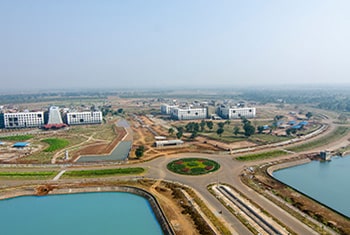
On July 14th, 2020, the U.S.-India Strategic Partnership hosted a panel by representatives of the state government of Chhattisgarh featuring Mr. R P Mandal, Chief Secretary; Mr. Manoj Kumar Pingua, Principal Secretary, Department of Commerce & Industries; Mr. Amitabh Jain, Additional Chief Secretary, Finance; Mr. Rakesh Chaturvedi, Principal Chief Conservator of Forest who offered insights to the capabilities and potential of the state, as well as opportunities for collaboration with the United States.
Since its creation in 2000, its industry has grown exponentially, and the state has achieved a leading position in the start-up and ease of doing business rankings for the nation. As a consequence of its shared borders with seven other states, it enjoys market access to a population of 510 million people, facilitated by its robust transportation systems.
What makes Chhattisgarh an attractive investment destination?
- Abundance of raw materials: Chhattisgarh also has many raw materials as a consequence of its geography. It is abundant in 28 minerals, making it an ideal destination in India for companies in iron, steel, and power industries. It also is home to many forest products, due to its 44% forest cover. This segment has seen a lot of growth with the export of forest produce across the globe, and is assisted by the fact that it is inherently organic, although full certification is yet to be acquired. Tribal families acting in a federation in the industry receive the Minimum Support Price and ensure the benefits of value addition reach the tribes. It is an area with great investment potential, and the federation is considering creating a BBB board to increase visibility of these raw materials.
- Human Capital: On the human capital side, its education ecosystem is well established. With 3000 vocational training institutes, it is home to the largest skill development effort in India. It also has a variety of public and private universities and colleges, as well as ITIs, to meet various educational needs.
- Geographical Connectivity: The state has also invested in its connectivity to increase ease of transport for industries, with national highways connecting Chhattisgarh to other major cities, as well as railways connecting remote regions of the state. Its ‘Smart City’, Nava Raipur, has state-of-the-art infrastructure as well as dedicated sectors for housing and non-polluting industries, making it an ideal location for technology-based industries.
- Industrial growth: Currently, industries in the state are in sector-specific industrial parks to facilitate cluster-based development in the state and all districts. Industries can be grouped by type: from ‘core strengths’ like steel, power and aluminum, to ‘sunrise sectors’ like food processing and biofuels, and ‘growth potentials’ like pharmaceuticals and textiles. This overview, along with Chhattisgarh’s ‘single window’ system and cost-efficient business opportunities, make it an ideal location for foreign capital.
Opportunities for collaboration with US Industry:
- Manufacturing in varied sectors, electronics, food processing, energy, and others. Some specific policies encourage the United States to consider Chhattisgarh as a location for capital. A highlight would be the Chhattisgarh Industrial Policy, which offers special bespoke incentives and subsidies for investments above $13 million and similar incentives in electronics and ITEs for fixed capital investments.
- Panelists pointed out that Chhattisgarh had fortunately fared quite well with COVID, with traceable contact of patients and no community spread. While the lockdown led industries to shut temporarily, processing industries and industries with continuous processes had continued to function. Currently, since most industries have opened to function at over 80% capacity and migratory laborers have returned to the state increasing labor supply, the moment is opportune to invest in the supply chain of the state.
Given the natural resources of the state and policy reforms to attract and favor investment, Chhattisgarh has committed itself to growing into its full industrial potential.

On May 5, Mugdha Sinha, Secretary of Science & Technology for the Government of Rajasthan, joined USISPF members through USISPF’s ongoing webinar series. In a discussion moderated by USISPF Chief Operating Officer Gaurav Verma, Ms. Sinha spoke on the Government of Rajasthan’s COVID-19 response and relief efforts, and the role that technology has played in this response.
Speaking on the Government of Rajasthan’s response to the COVID-19 outbreak, Ms. Sinha highlighted the proactive creation of two committees shortly after the first lockdown was announced, to address the needs of people from other states stranded in Rajasthan during the lockdown and to develop a post-COVID-19 economic strategy. Now that the lockdown is in its third stage, relaxing restrictions on movements in some district and allowing businesses and factories to resume activities, the Government of Rajasthan is now working to help people from Rajasthan who have been stranded elsewhere, domestically or abroad. Ms. Sinha identified new challenges related to these efforts, such as screening and quarantine measures to prevent new outbreaks of COVID-19 and increased demand for rural jobs as migrant workers return to their homes, but highlighted that so far, Rajasthan’s containment efforts have been efficient, effective, and proactive. She also highlighted that these efforts have been calibrated to save lives without risking livelihoods.
In terms of how Rajasthan has leveraged technology in its COVID-19 response, Ms. Sinha noted that ‘e-governance’ measures were already in place prior to the lockdown, which eased the transition to working from home for government officials. As well as contact tracing apps and processes virtually connecting the Government of Rajasthan to its constituents, the state has leveraged technological solutions to continue providing public access to cultural activities such as museums, which also provides continued employment to artists and artisans.
USISPF and Squire Patton Boggs co-hosted a webinar briefing members on the latest policy responses to COVID-19 from a U.S., European, and Indian perspective. Speakers included Frank Samolis, Partner at Squire Patton Boggs; Ambassador Frank Wisner, International Affairs Advisor at Squire Patton Boggs; former U.S. Representative Joe Crowley; Matthew Kirk, International Affairs Advisor at Squire Patton Boggs; David Stewart, Principal at Squire Patton Boggs; and Dharmakirti Joshi, Chief Economist at CRISIL.
David Stewart, Matthew Kirk, and Dharmakirti Joshi spoke on the respective government efforts of the U.S., Europe, and India to reopen their economies while continuing to contain the spread of the COVID-19 virus. David Stewart opened the discussion by highlighting the U.S. government’s economic stimulus efforts in response to COVID-19, including the CARES Act, the Paycheck Protection Program, and the Main Street Lending program. In Europe, different countries have different in their impact and response to the COVID-19 pandemic, but across countries, efforts to reopen the economy largely involve adhering to social distancing measures, using track-and-trace systems to contain the further spread of the coronavirus, and financial packages. Dharmakirti Joshi stated that, while India has a limited fiscal space in which to organize its response, the country has several options to finance its response. He also noted that India has not “front-loaded” its response, and the next phase of its policy response should be aimed at support for small and medium businesses.
In a Q&A session with USISPF President and CEO Mukesh Aghi, Joe Crowley, Frank Wisner, and Frank Samolis shared their perspectives on the relationship between the U.S. and India. Rep. Crowley shared his insight into how the relationship between the U.S. and India has grown over the past few decades, and Frank Samolis spoke on the possibility of future trade negotiations between the U.S. and India. Amb. Wisner stated that cooperation between the U.S., Europe, and India is vital to containing COVID-19 and bringing back their economies, especially given the shifts occurring in the global economy as a result of COVID-19. He also highlighted the importance of India presenting a competitive and attractive market for foreign investment, to take advantage of global interest in diversifying supply chains.
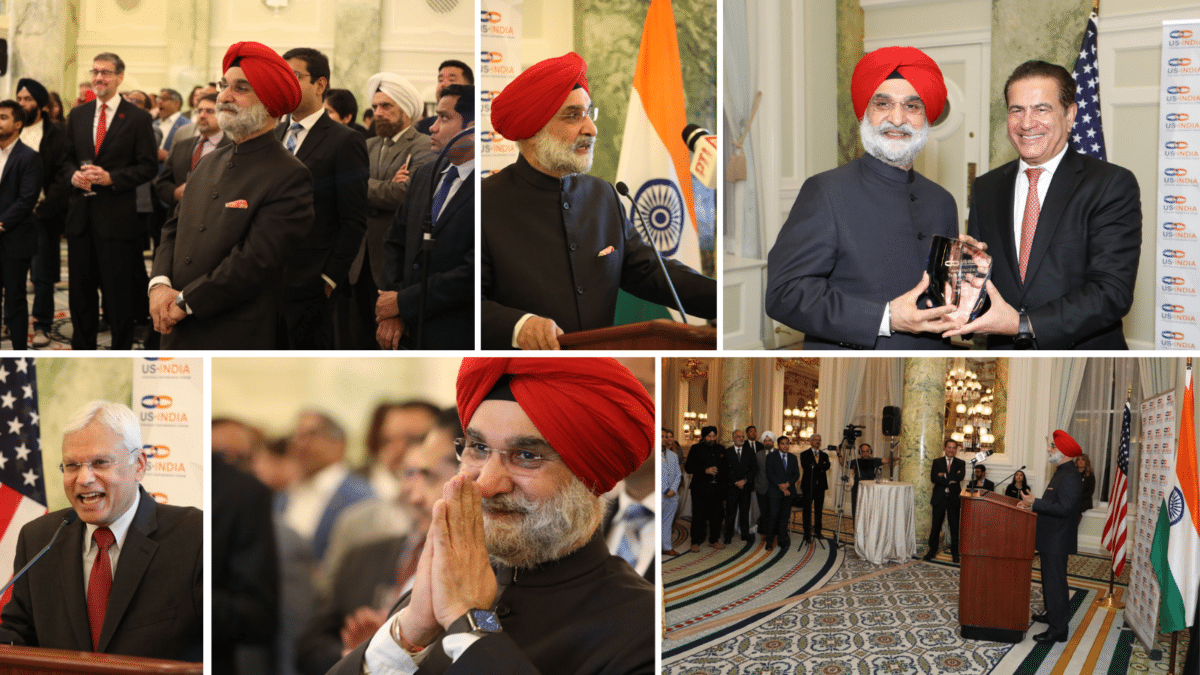
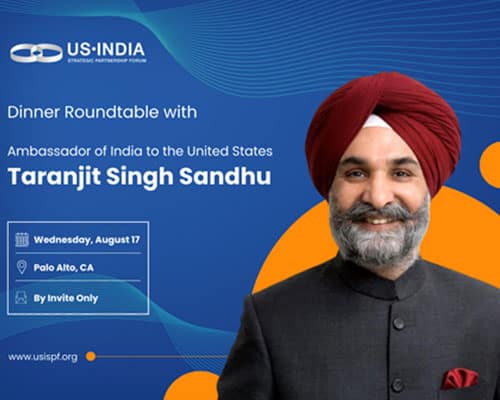
On April 9, Amb. Taranjit Sandhu, the Ambassador of India to the United States, joined USISPF members on a webinar to provide updates on India’s COVID-19 response and what the Embassy of India is doing to assist citizens and businesses at this difficult time.
In terms of India’s response to COVID-19, Ambassador Sandhu emphasized that India’s goal is to minimize the human cost of the pandemic and to contain the virus. He highlighted the $22.5 billion stimulus package the Government of India announced in March, which provides targeted aid to India’s most vulnerable citizens. He also noted the Government of India’s recent decisions to extend tax deadlines and the visas of foreign nationals unable to leave India due to the national lockdown. He spoke of the opportunities for the U.S. and India to collaborate on issues related to COVID-19 in areas ranging from technological transfers to vaccine development, pointing to the recent teleconference and Twitter exchanges between Indian Prime Minister Narendra Modi and U.S. President Donald Trump in which the two leaders reiterate their commitment to working together at this time. He also stated that there will be many opportunities for India and the U.S. to strengthen economic ties in the post-pandemic future, particularly in the energy sector.
Ambassador Sandhu also answered questions from USISPF members related to lockdown exemptions for essential goods and services, the Government of India’s recent decision to ease restrictions on pharmaceutical exports, and where to find updates on pandemic-related policy decisions. The Ambassador encouraged U.S. companies with a presence in India to reach out to the Embassy’s commerce wing for assistance on specific issues.